Why Is My Sourdough Not Rising? (And How to Fix It Without Panicking)
Why is my sourdough not rising? If you’ve been staring at a flat lump of dough wondering what went wrong — you’re not alone.Your sourdough sat on the counter for hours. You checked it once, checked it again, and it’s just… sitting there. Flat. Indifferent. Mocking you.
Before you throw it out and order pizza — don’t. Sourdough not rising is one of the most common problems beginners face, and almost every cause has a simple fix. I’ve been through all of them. Some of them twice.
Here’s what’s actually going on and how to fix it without losing your mind.
First — What “Rising” Actually Means in Sourdough
Sourdough rises because of fermentation, not commercial yeast. Your starter — that jar of wild yeast and bacteria living on your counter — is what makes the dough grow.
When fermentation is working correctly, the wild yeast produces carbon dioxide gas. That gas gets trapped in the gluten structure of your dough, making it expand and rise.
When sourdough doesn’t rise, something is interrupting that process. It’s usually one of these eight things.
8 Reasons Why Your Sourdough Is Not Rising
1. Your Starter Isn’t Ready to Bake With
This is the most common reason sourdough won’t rise — and the one most beginners overlook.
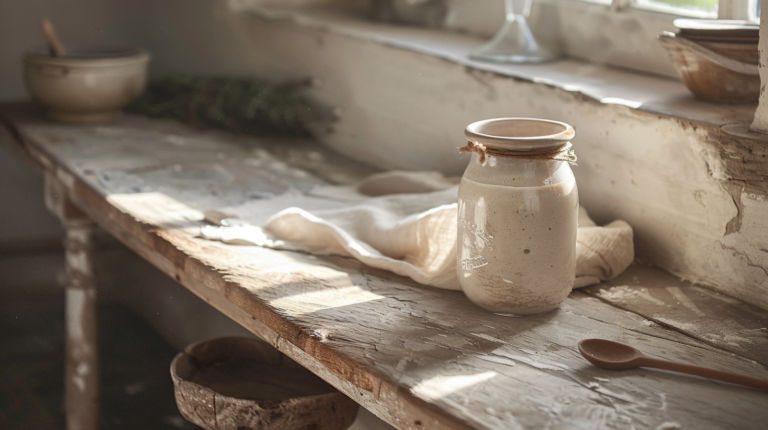
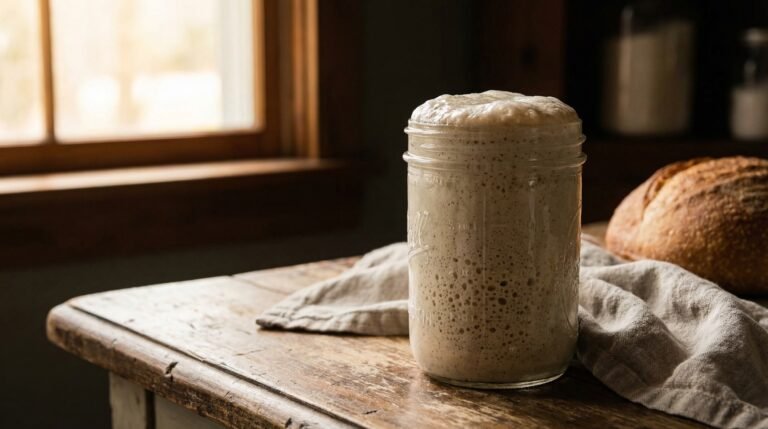
A starter needs to be active and strong before it can leaven bread. That means it should be doubling in size within 4-8 hours of feeding, smelling pleasantly sour and yeasty, and showing bubbles throughout.
How to check: Drop a small spoonful of starter into a glass of water. If it floats, it’s ready. If it sinks, it needs more time.
The fix: Feed your starter consistently for several days before baking. Use equal weights of starter, flour, and water. Give it time to establish a strong population of wild yeast.
If your starter is new, it may simply not be mature enough yet. Most starters need 1-2 weeks of regular feeding before they’re strong enough to raise bread reliably.

2. Your Kitchen Is Too Cold
Wild yeast is slow. Cold yeast is even slower.
Sourdough fermentation happens best between 75°F and 80°F. If your kitchen is cooler than that — especially in winter, or with air conditioning running — your dough will rise, but it will take significantly longer than most recipes suggest.
Signs this is your problem: Your dough eventually does rise, just much more slowly than expected.
The fix: Find a warmer spot in your home. Top of the refrigerator, inside the oven with just the light on, or next to a warm appliance. You can also use warm water (around 85°F) when mixing your dough to give fermentation a head start.
A kitchen thermometer is one of the most useful tools a sourdough baker can own.
3. You Used the Wrong Flour
Not all flour behaves the same way in sourdough.
Bread flour has a higher protein content than all-purpose flour, which means it develops stronger gluten — and stronger gluten traps more gas, which means a better rise.
All-purpose flour works, but it produces a softer, less structured dough that doesn’t always rise as dramatically.
Whole wheat and rye flour can actually boost fermentation because they contain more wild yeast food. But too much of either one can make dough dense.
The fix: Use bread flour for your main loaves, especially while you’re learning. Once you understand how your dough behaves, you can start experimenting with flour blends.
If figuring out sourdough has you thinking there might be other things worth learning from scratch — this is the system I use to build income online from the ranch. Same energy. Different kind of dough.
4. You Over-Fermented the Dough
Yes — sourdough can ferment for too long.
When dough over-ferments, the gluten structure breaks down. Instead of a strong network that traps gas, you end up with a slack, sticky mess that can’t hold its shape or rise properly during baking.
Signs of over-fermentation: Dough feels very sticky and slack. It spreads sideways instead of holding its shape. It may smell strongly sour or almost alcoholic.
The fix: Watch your dough, not the clock. Recipes give time ranges because every kitchen is different. Learn to read the dough — it should feel airy and slightly jiggly, not sticky or collapsed.
5. You Didn’t Develop Enough Gluten
Gluten is what holds everything together. No gluten structure, no rise.
Commercial bread uses kneading to develop gluten quickly. Sourdough typically uses stretch and fold techniques during bulk fermentation instead.
If you skipped the stretch and folds — or didn’t do enough of them — your dough may not have the structure to hold the gas produced during fermentation.
The fix: During bulk fermentation, perform 4 sets of stretch and folds every 30 minutes. Each set should include 4 folds, rotating the bowl a quarter turn each time. This builds gluten gently without degassing the dough.
6. Your Water Has Too Much Chlorine
This one surprises people.
Chlorine is added to municipal water to kill bacteria. The problem is it can also inhibit the wild yeast and bacteria in your starter — slowing fermentation or preventing it altogether.
Signs this is your problem: Your starter seems sluggish despite regular feeding. Your tap water smells noticeably of chlorine.
The fix: Use filtered water or let tap water sit out overnight before using it. The chlorine dissipates on its own with exposure to air. This small change makes a noticeable difference for many bakers.
7. You’re Baking at the Wrong Time
Sourdough has a window — and if you miss it, the rise you worked for is already gone.
After bulk fermentation, dough should go through final shaping and proofing. If you bake too early, the yeast hasn’t done enough work. If you bake too late, the structure has collapsed.
Signs it’s ready to bake: The dough has grown noticeably. It jiggles slightly when you shake the pan. A floured finger poked into the dough springs back slowly — not immediately, not never.
The fix: The poke test is your best friend. If the indent springs back immediately, it needs more time. If it doesn’t spring back at all, you’re past the window. Bake when it springs back slowly and partially.
8. Your Oven Isn’t Hot Enough
Sourdough needs a hot oven — usually 450°F to 500°F.
The initial blast of heat causes what bakers call oven spring — a final burst of rise right at the start of baking. If your oven isn’t fully preheated, you lose that spring and end up with a denser, flatter loaf.
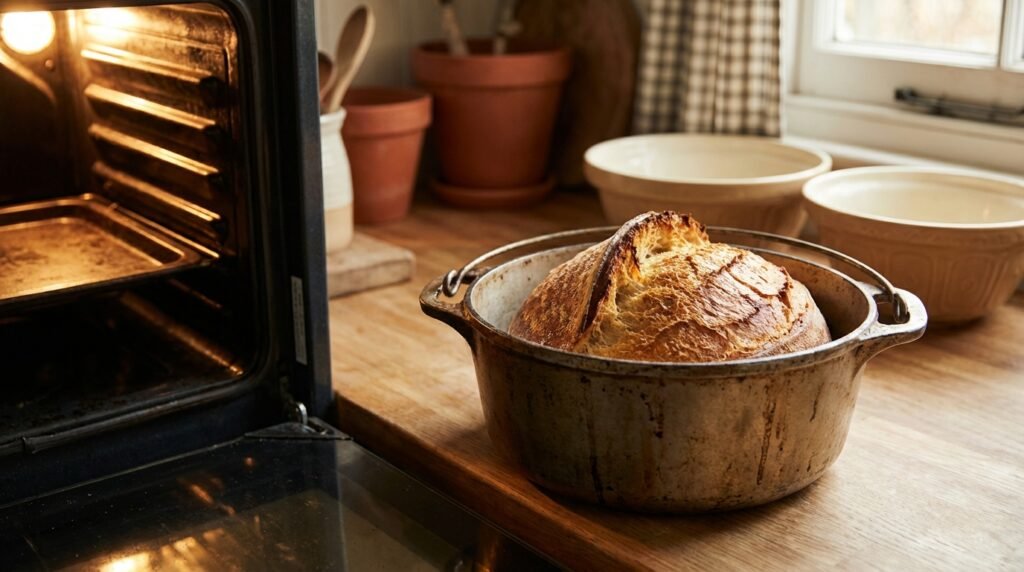
Baking in a dutch oven also matters. The trapped steam during the first 20 minutes keeps the crust soft and flexible so the bread can continue expanding.
The fix: Preheat your oven for at least 45 minutes before baking. If you’re using a dutch oven, preheat it inside the oven too. An oven thermometer is worth owning — many ovens run cooler than their dial suggests.
Quick Diagnosis Guide
| Symptom | Most Likely Cause |
|---|---|
| Dough didn’t rise at all | Weak starter or too cold |
| Dough rose slowly | Cold kitchen |
| Dough rose then collapsed | Over-fermented |
| Dough spread sideways | Weak gluten or over-fermented |
| Dense crumb, good rise | Oven temperature or timing |
| Starter not bubbling | Chlorine in water or young starter |
The One Thing That Fixes Most Rising Problems
If you can only do one thing — feed your starter consistently for a week before you bake.
Most sourdough problems trace back to a starter that isn’t strong enough yet. A healthy, active starter is patient. It will wait for the right temperature. It will work with almost any flour. It forgives a lot.
Build the starter first. Everything else gets easier.
One More Thing
Sourdough that won’t rise is frustrating — but it’s also just information. Every flat loaf is telling you something. Once you learn to read it, you stop panicking and start adjusting.
“Here’s the thing about sourdough not rising — it’s almost never one big dramatic problem. It’s usually something small and fixable that you just needed someone to point out. I think about building online income the same way. I started selling AI-designed digital products on Etsy while I was learning sourdough — both have a learning curve, both reward patience, and both got a lot easier once I had the right system. New design ideas every day, methods always being updated, so the creating never feels like a grind. If you’re curious what that looks like from a ranch kitchen at 10pm, this is what I use. It keeps getting better — which, unlike a flat sourdough loaf, is exactly what you want.”
— Ella
RELATED POSTS (add links to these in WordPress)
- Why Is My Sourdough Dense? 10 Causes and Exactly How to Fix Each One
- How to Make a Sourdough Starter from Scratch in 7 Days
- 7 Signs Your Sourdough Starter Is Ready to Bake
- How to Revive a Neglected Sourdough Starter in 3 Days
© Ranch Rebel / FarmhouseByHand.com