Sourdough Discard Recipes: 5 Easy Ways to Use It Up (That Actually Taste Good)
This post contains affiliate links. If you purchase through my links I may earn a small commission at no extra cost to you. I only recommend products I actually use and trust.
For a long time I just threw the discard away.
Every feeding, I’d scoop out a portion of starter, toss it in the trash, and move on. Nobody told me you could do anything useful with it. And honestly, the word “discard” doesn’t exactly inspire confidence in the kitchen.
Then I made sourdough discard pancakes for the first time and everything changed.
That slightly tangy flavor that the discard brings to whatever you put it in — it’s genuinely good. Not weird. Not sour in an off-putting way. Just a depth of flavor you don’t get from regular batter. My family noticed immediately. My horses did not, but they’re not exactly discerning.
If you’ve been throwing your discard away, this post is going to change that. Here are the 5 sourdough discard recipes I make on repeat — the ones that actually get requested, actually taste good, and actually use up that jar of discard sitting in your fridge right now.
What Is Sourdough Discard Anyway?
Before we get into recipes, let me quickly explain what discard actually is — because if you’re new to sourdough it can be a confusing term.
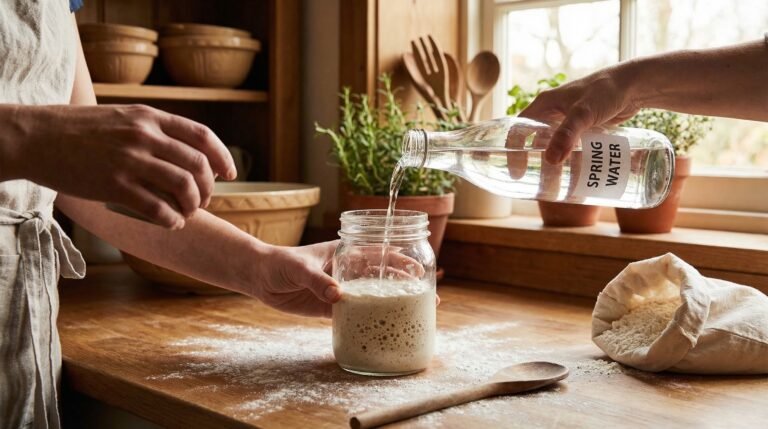
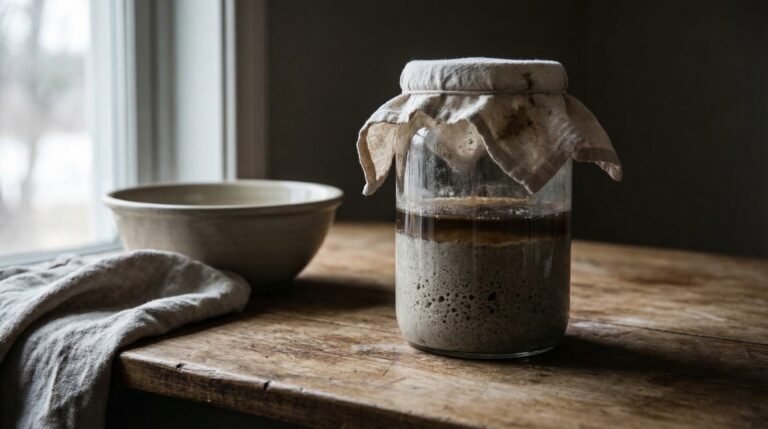
Every time you feed your starter, you remove a portion of it before adding fresh flour and water. That removed portion is the discard. It’s not bad. It’s not ruined. It’s just starter that hasn’t been recently fed — which means it’s more acidic than your active starter and not strong enough to leaven a full loaf of bread on its own.
But in recipes that use baking powder or baking soda as the main leavening? It works beautifully. The tang it brings is a feature, not a bug.
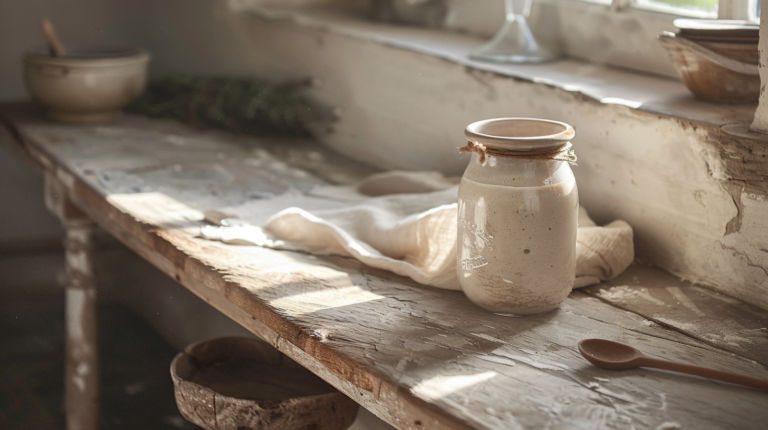
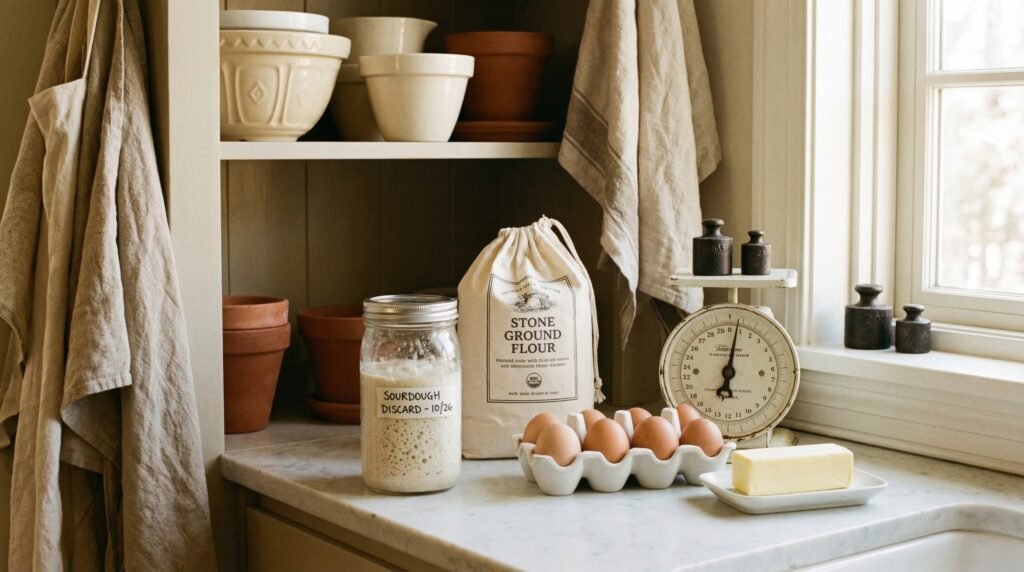
Discard can live in a jar in your fridge for up to two weeks. I keep a dedicated discard jar — separate from my active starter — and add to it after every feeding. By the time I’m ready to bake something with it, I’ve usually got plenty to work with.
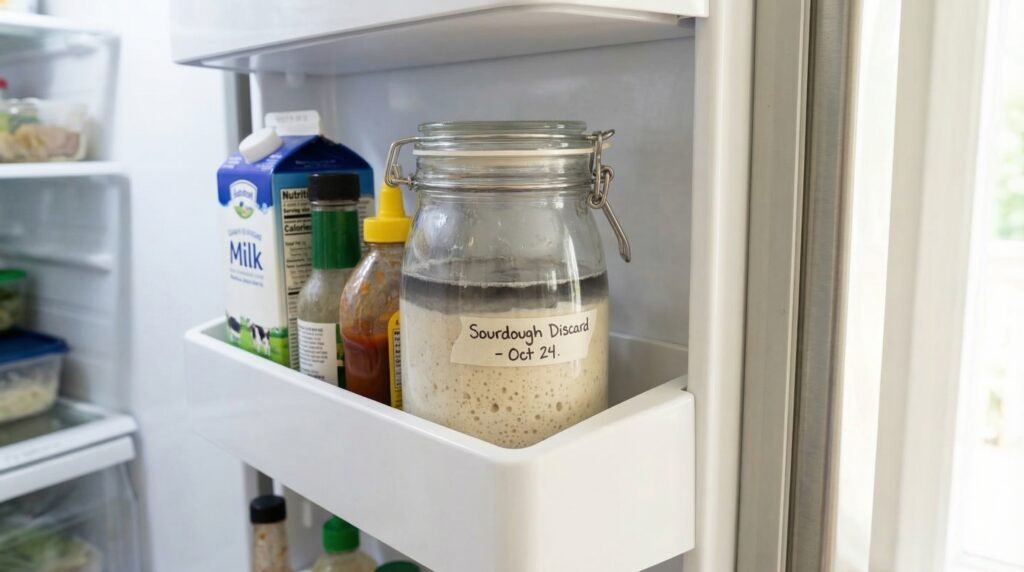
📸 IMAGE 2 Prompt: A glass jar of sourdough discard sitting in a refrigerator door, slightly grey and liquid on top showing it’s been stored a few days, natural light, clean farmhouse aesthetic Alt text: sourdough discard stored in glass jar in refrigerator Placement: After this section
A Few Things Worth Knowing Before You Start
Your discard doesn’t need to be at room temperature for most of these recipes. Straight from the fridge works fine. I bake with cold discard all the time.
The older the discard, the more sour the flavor. Fresh discard is mild. Week-old discard has more tang. Both work — it’s just a matter of how much flavor you want.
These recipes all use baking powder or baking soda. Discard doesn’t have enough active yeast to make things rise on its own. These are quick recipes — no waiting, no proofing, no planning ahead.
Measurements matter. I weigh my discard on my kitchen scale for consistent results. A cup of discard can vary a lot depending on how thick yours is.
Recipe 1: Sourdough Discard Pancakes
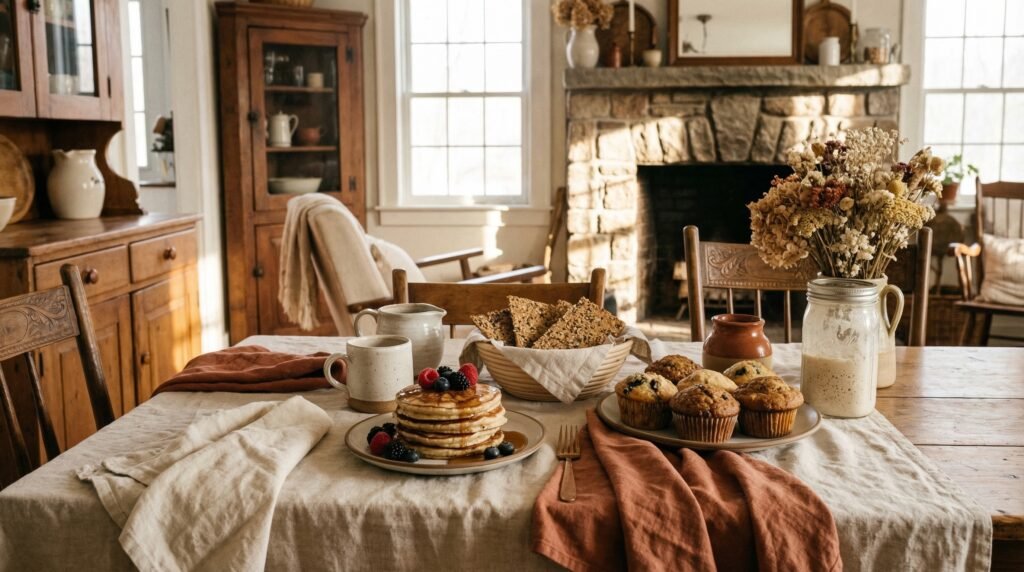
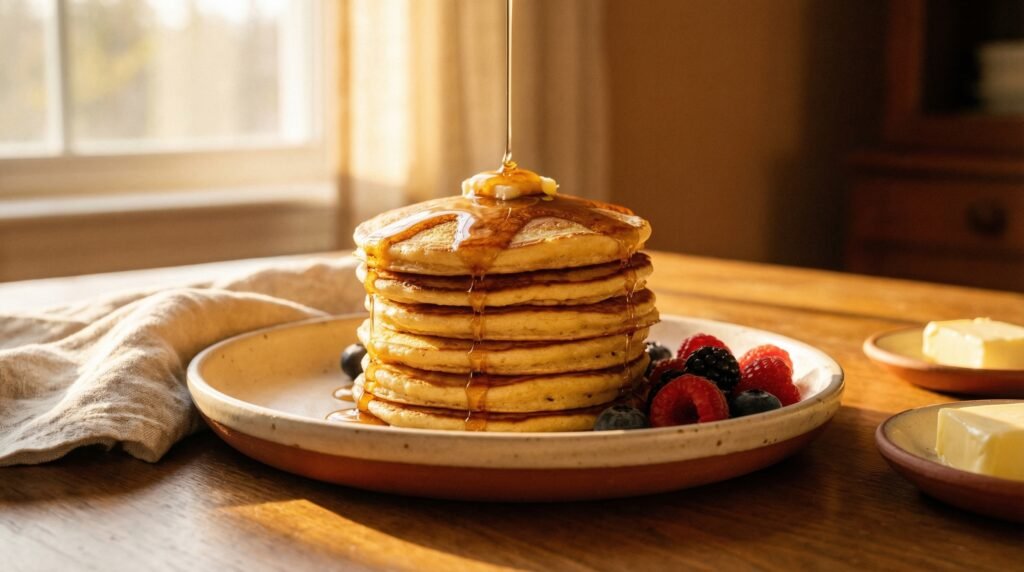
These are the ones that started it all for me. Fluffy, slightly tangy, and genuinely the best pancakes I’ve made. My family requests these on weekend mornings now and I’ve stopped making regular pancakes entirely.
The discard adds a subtle sourness that balances the sweetness of maple syrup perfectly. If you’ve never had sourdough pancakes, you’re in for a surprise.
Ingredients
(Makes about 8 pancakes)
- 240g (1 cup) sourdough discard
- 120g (1 cup) all-purpose flour — unbleached
- 1 tsp baking powder
- ½ tsp baking soda
- ½ tsp salt
- 1 tbsp sugar
- 1 egg
- 120ml (½ cup) milk — any kind works
- 2 tbsp melted butter or neutral oil
- 1 tsp vanilla extract
Instructions
- In a large bowl, whisk together the flour, baking powder, baking soda, salt, and sugar.
- In a separate bowl, whisk together the discard, egg, milk, melted butter, and vanilla.
- Pour the wet ingredients into the dry ingredients and stir until just combined. Don’t overmix — lumps are fine. Overmixed pancake batter is tough pancake batter.
- Heat a skillet or griddle over medium heat. Lightly grease with butter or cooking spray.
- Pour about ¼ cup of batter per pancake. Cook until bubbles form on the surface and the edges look set — about 2 to 3 minutes. Flip and cook another 1 to 2 minutes.
- Serve immediately with maple syrup.
Ella’s Note: The batter will be slightly thicker than regular pancake batter because of the discard. If it seems too thick, add a splash more milk. If it spreads too thin, add a tablespoon of flour. Adjust as you go.
Recipe 2: Sourdough Discard Crackers
These are my most-made discard recipe. They come together in about 30 minutes, they last for days in an airtight container, and they are genuinely addictive. I bring these out with cheese and they disappear immediately.
The thin, crispy texture you get from discard crackers is hard to replicate any other way. The tang from the discard does something magical with butter and salt.
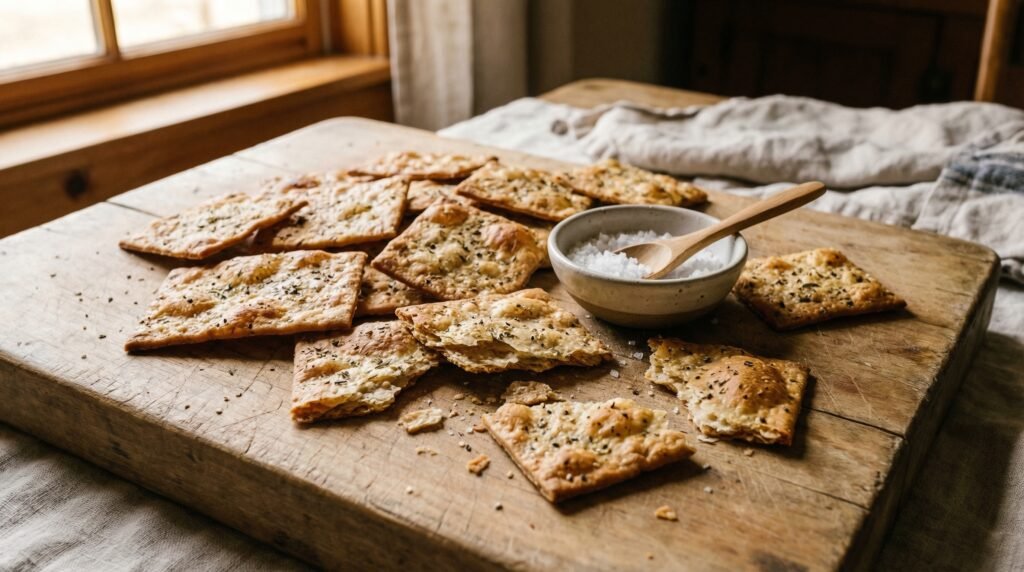
📸 IMAGE 4 Prompt: Thin sourdough discard crackers scattered on a rustic wooden board with a small bowl of sea salt, some crackers broken showing the thin crispy texture, warm natural light, farmhouse aesthetic Alt text: sourdough discard crackers on rustic wooden board with sea salt Placement: Above recipe
Ingredients
(Makes about 40 crackers)
- 240g (1 cup) sourdough discard
- 60g (¼ cup) melted butter — salted
- ½ tsp salt
- Optional toppings: flaky sea salt, everything bagel seasoning, dried rosemary, sesame seeds
Instructions
- Preheat your oven to 325°F.
- Mix the discard, melted butter, and salt together until smooth.
- Line a large baking sheet with parchment paper. Pour the batter onto the parchment.
- Spread it as thin as you can get it — use an offset spatula or the back of a spoon. The thinner the better. You’re aiming for almost translucent in spots.
- Sprinkle your toppings over the top and press them in lightly.
- Bake for 25 to 35 minutes until golden and crisp all the way through. The edges will darken first — that’s fine.
- Remove from oven and let cool completely on the pan. They’ll crisp up further as they cool.
- Break into irregular pieces and store in an airtight container for up to a week.
Ella’s Note: The baking time varies a lot depending on how thin you spread it. Check at 25 minutes. If the center still feels soft, give it another 5 minutes. You want the whole thing to feel dry and crisp — not just the edges.
Recipe 3: Sourdough Discard Banana Bread
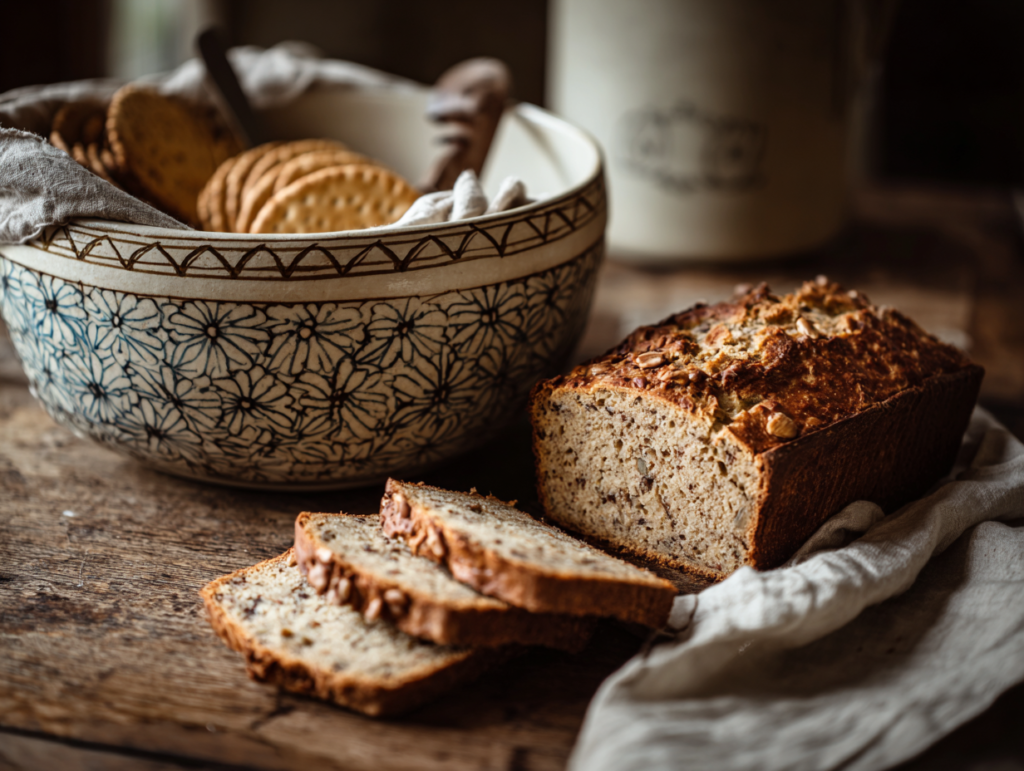
Banana bread is already good. Sourdough discard banana bread is better. The tang from the discard cuts through the sweetness of the bananas and adds a complexity that regular banana bread doesn’t have.
This is my go-to for using up both overripe bananas and discard at the same time. Two problems, one loaf.
Ingredients
(Makes 1 standard loaf)
- 200g (¾ cup) sourdough discard
- 3 very ripe bananas — mashed (about 300g)
- 100g (½ cup) sugar — brown sugar preferred
- 2 eggs
- 80ml (⅓ cup) melted butter or neutral oil
- 1 tsp vanilla extract
- 200g (1⅔ cups) all-purpose flour — unbleached
- 1 tsp baking soda
- ½ tsp baking powder
- ½ tsp salt
- 1 tsp cinnamon
Instructions
- Preheat oven to 350°F. Grease a standard 9×5 loaf pan.
- In a large bowl, mash the bananas until mostly smooth.
- Add the discard, sugar, eggs, melted butter, and vanilla. Whisk until combined.
- Add the flour, baking soda, baking powder, salt, and cinnamon. Stir until just combined — same rule as pancakes, don’t overmix.
- Pour into the prepared loaf pan and bake for 55 to 65 minutes, until a toothpick inserted in the center comes out clean.
- Cool in the pan for 10 minutes, then turn out onto a wire rack to cool completely.
Ella’s Note: Cover the top loosely with foil after 40 minutes if it’s browning faster than you’d like. Every oven is different — mine runs hot so I usually cover at 35 minutes.
Recipe 4: Sourdough Discard Pizza Dough
This one surprises people every time.
Sourdough discard pizza dough is not the same as a proper sourdough pizza that ferments overnight. This is a quick same-day dough that uses the discard for flavor and baking powder for lift. It comes together in minutes and produces a pizza crust with way more character than anything from a store-bought mix.
The slight tang from the discard is genuinely perfect with tomato sauce and cheese.

Ingredients
(Makes 2 medium pizzas or 1 large)
- 240g (1 cup) sourdough discard
- 180g (1½ cups) all-purpose flour — unbleached, plus more for kneading
- 1 tsp baking powder
- ½ tsp salt
- 2 tbsp olive oil
- 60ml (¼ cup) water — adjust as needed
Instructions
- Preheat oven to 450°F. If you have a pizza stone or baking steel, put it in now.
- Mix the discard, flour, baking powder, salt, and olive oil together in a bowl.
- Add water a little at a time until the dough comes together into a slightly sticky ball. You may not need all of it.
- Turn out onto a lightly floured surface and knead for 2 to 3 minutes until smooth.
- Divide in half for two pizzas. Roll or stretch each portion as thin as you can manage.
- Place on parchment paper, add your toppings, and bake for 12 to 15 minutes until the crust is golden and the cheese is bubbling.
Ella’s Note: This dough is more forgiving than it looks. If it tears while you’re stretching it, just pinch it back together. It doesn’t need to be perfect — rustic is the whole aesthetic here anyway.
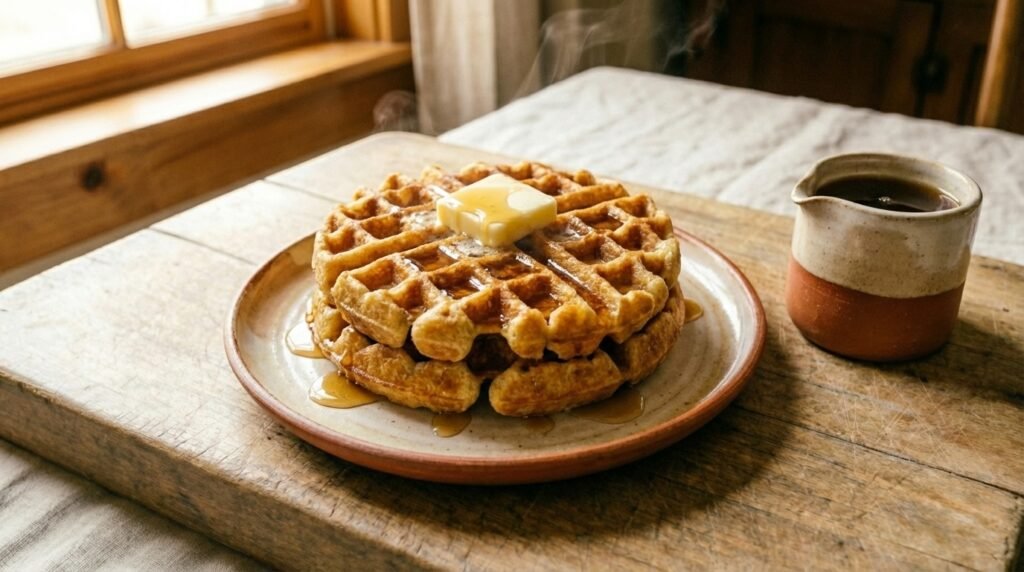
Recipe 5: Sourdough Discard Waffles
Pancakes get all the attention but waffles are honestly where discard really shines. The crispy exterior you get from a waffle iron combined with that sourdough tang — it’s a combination that’s hard to beat.
These are weekend-morning food. Worth getting the waffle iron out for.
Ingredients
(Makes about 4 large waffles)
- 240g (1 cup) sourdough discard
- 120g (1 cup) all-purpose flour — unbleached
- 1 tsp baking powder
- ½ tsp baking soda
- ½ tsp salt
- 1 tbsp sugar
- 2 eggs — separated
- 120ml (½ cup) milk
- 60ml (¼ cup) melted butter
- 1 tsp vanilla extract
Instructions
- Preheat your waffle iron and grease it lightly.
- In a large bowl whisk together the flour, baking powder, baking soda, salt, and sugar.
- In a separate bowl, whisk together the discard, egg yolks, milk, melted butter, and vanilla.
- In a third bowl — yes, a third bowl, I know — beat the egg whites until stiff peaks form. This is what makes the waffles light and crispy rather than dense.
- Stir the wet ingredients into the dry until just combined.
- Gently fold in the egg whites. Don’t stir aggressively — you want to keep the air in.
- Cook in your waffle iron according to its instructions — usually 3 to 5 minutes until golden and crisp.
- Serve immediately. Waffles do not wait for anyone.
Ella’s Note: Separating the eggs and beating the whites is the extra step that makes these genuinely worth making. You can skip it and just use whole eggs — they’ll still be good. But if you want waffles that are actually crispy and light, take the extra five minutes.
How to Store Sourdough Discard
Keep it in a jar in the fridge. That’s it.
I use a dedicated discard jar — separate from my active starter — and just add to it after every feeding. It keeps well for up to two weeks in the fridge. Beyond two weeks it gets very sour and the flavor starts to be more prominent than most people want in baked goods.
If you’re not baking with it regularly and the jar is getting full, you can freeze discard in silicone ice cube trays. Pop them out, store in a freezer bag, and thaw what you need when you need it. Works perfectly.
Frequently Asked Questions
Can I use discard that’s been in the fridge for two weeks? Yes — it’ll just be more sour than fresh discard. For crackers and savory recipes that’s actually great. For sweeter recipes like banana bread you might want to use it while it’s a little fresher.
Do these recipes work with unfed starter? Yes. Discard and unfed starter are essentially the same thing — starter that hasn’t been recently fed. If you have starter that’s past its peak and you don’t want to waste it, use it exactly the same way you’d use discard.
Why did my crackers come out soft instead of crispy? Either they weren’t spread thin enough or they needed more time in the oven. Put them back in for another 5 to 10 minutes. They should feel completely dry to the touch before you take them out.
Can I make these recipes with active starter instead of discard? Yes. Active starter works in any of these recipes. The flavor will be slightly milder since it’s been recently fed, but the recipes will work exactly the same.
How much discard do these recipes use? Each recipe uses about 1 cup (240g) of discard. If you’re feeding your starter regularly, that’s roughly one feeding’s worth of discard — which means you can make one of these every time you feed your starter and never waste a gram.
Conclusion
Throwing away sourdough discard is the sourdough equivalent of pouring good coffee down the drain. It feels wrong once you know what you can do with it.
These five recipes are my most-used and most-requested. The crackers alone are worth keeping a discard jar in the fridge for. And the pancakes — once you’ve had sourdough pancakes, regular pancakes feel like a downgrade.
Start with whichever one sounds best to you. Use up that discard. Make something good.
And if you try one of these, drop a comment below and tell me how it went. I genuinely love hearing about it. 🍞
New to sourdough? Start at the beginning: Sourdough for Beginners: The Simple Method That Actually Works →
Not sure how to feed your starter? How to Feed Your Sourdough Starter the Simple Way →
Want to know when your starter is ready to bake with? 7 Signs Your Sourdough Starter Is Ready to Bake →