9 Essential Sourdough Tools and Equipment (And 3 That Are Just Hype)
This post contains affiliate links. If you purchase through my links I may earn a small commission at no extra cost to you. I only recommend products I actually use and trust.
Sourdough tools and equipment — you need less of it than the internet wants you to think.
Let me save you some money.
The sourdough world has a way of making you feel like you need a lot of equipment before you can bake a decent loaf. Specialty proofing boxes. Fancy timers. Artisan brotforms that cost more than your grocery bill. Cookbooks with beautiful photos of bread you’re told you can’t make without seventeen additional purchases.
You don’t need most of it.
I’ve been baking sourdough long enough to know exactly what earns its counter space and what sits in a cabinet collecting flour dust. Here’s my honest list — the tools I actually use, why I use them, and the ones I think are genuinely overrated.
The 10 Tools Worth Buying
1. A Dough Machine With a Ferment Function
This is the tool that changed everything for me.
I started with a regular bread maker on the dough setting — and honestly, that works beautifully. If you already have a bread maker, use it. The dough setting does the mixing and kneading without you touching it and it’s perfectly adequate for sourdough.
But I eventually upgraded to the Joydeem Electric Dough Maker — and the reason is the built-in ferment function. It mixes AND ferments in the same bowl at a controlled temperature. That’s why my same-day sourdough method actually works. No waiting for the right room temperature, no babysitting the dough. It handles it.
If you’re starting out, a bread maker is fine. If you want to upgrade, the Joydeem is worth every penny.
What it replaces: Hand kneading, guessing about fermentation temperature, multiple bowls
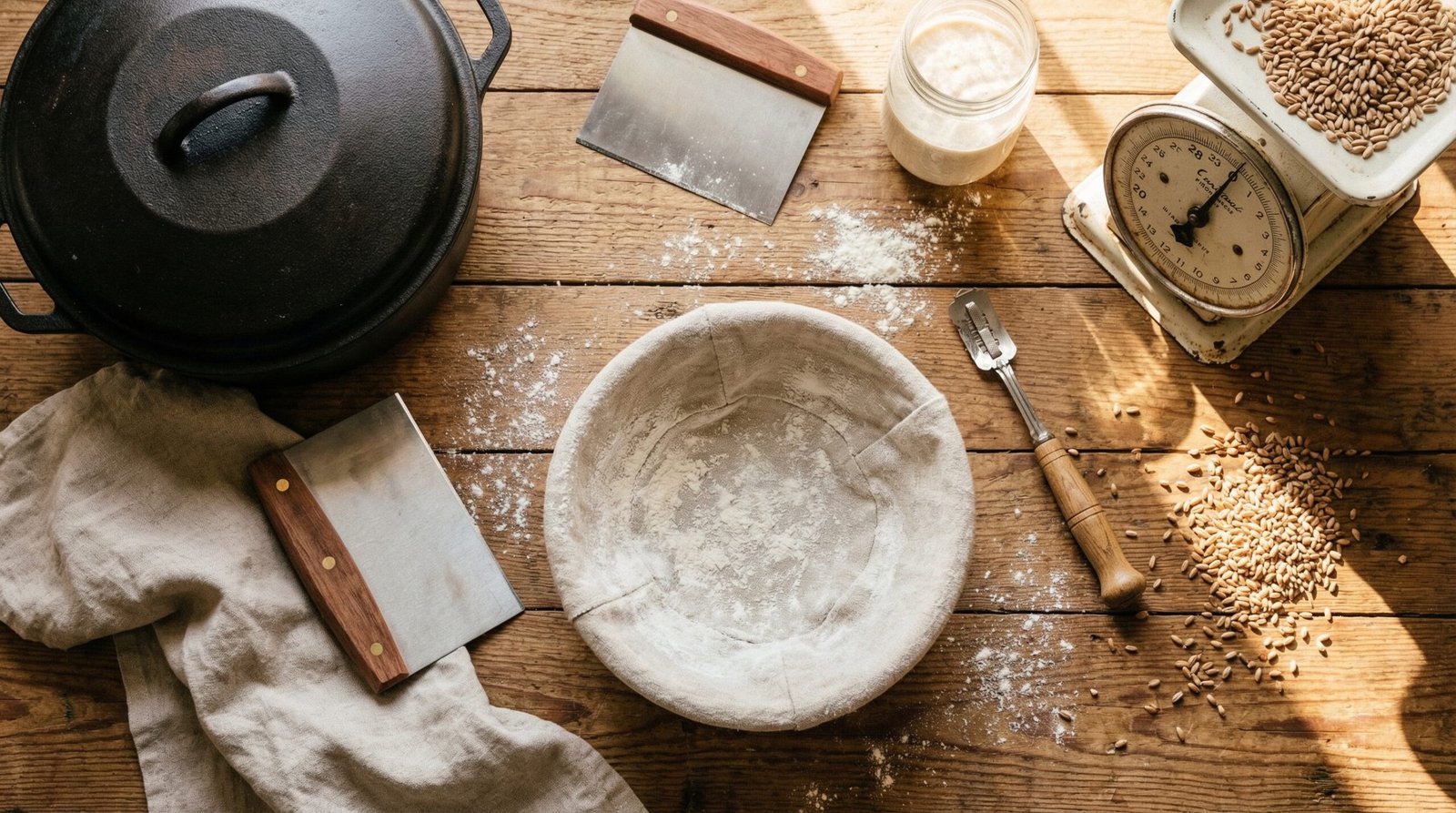
2. A Kitchen Scale
Non-negotiable. I’m sorry but there’s no way around this one.
Sourdough is a ratio game — starter to flour to water — and measuring by volume is inconsistent enough to cause real problems. A cup of flour can vary by 20% depending on how you scoop it. A gram of flour is always a gram of flour.
I use this kitchen scale — accurate, easy to clean, tare function so you can zero it out between ingredients. It costs less than a bag of good flour and it will improve your baking immediately.
What it replaces: Measuring cups for baking, inconsistent results
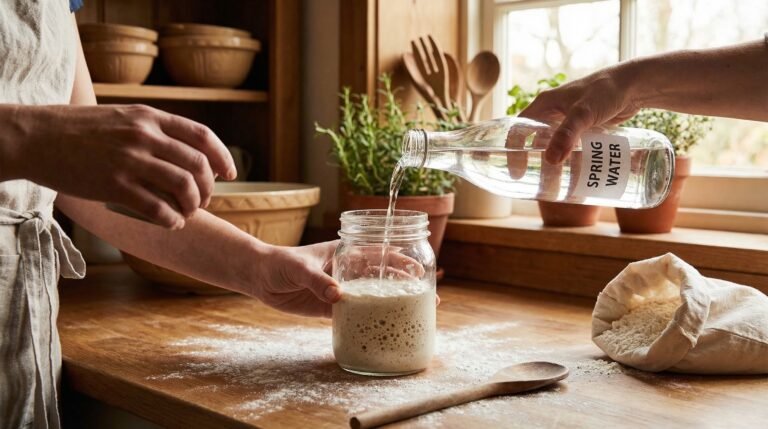
3. A Dedicated Sourdough Starter Jar
A wide mouth Ball jar works perfectly fine and if you already have one, start there. Seriously — don’t buy anything until you know you’re going to stick with sourdough.
That said, once I switched to a dedicated starter jar I never went back.
I use the Premium Sourdough Starter Jar Kit and the reason I love it is the wide mouth — wide enough to fit a 1-cup measuring cup inside, which sounds minor until you’re trying to scoop starter out of a narrow jar at 6am. It also comes with measurement markings on the side, a silicone lid, a spatula, a thermometer strip, and a feeding tracker band.
Start with a Ball jar. Upgrade when you’re ready.
What it replaces: Mason jars, rubber bands for tracking rise, separate thermometer
4. A Cast Iron Dutch Oven
The Dutch oven is what gives sourdough its signature crust. Baking covered traps steam around the dough in the first phase of baking — that steam is what creates the crackly crust and allows the bread to expand properly before the crust sets.
Without a Dutch oven you can still bake sourdough but it won’t have the same crust or oven spring. This is the one piece of equipment that genuinely affects the outcome of your bread.
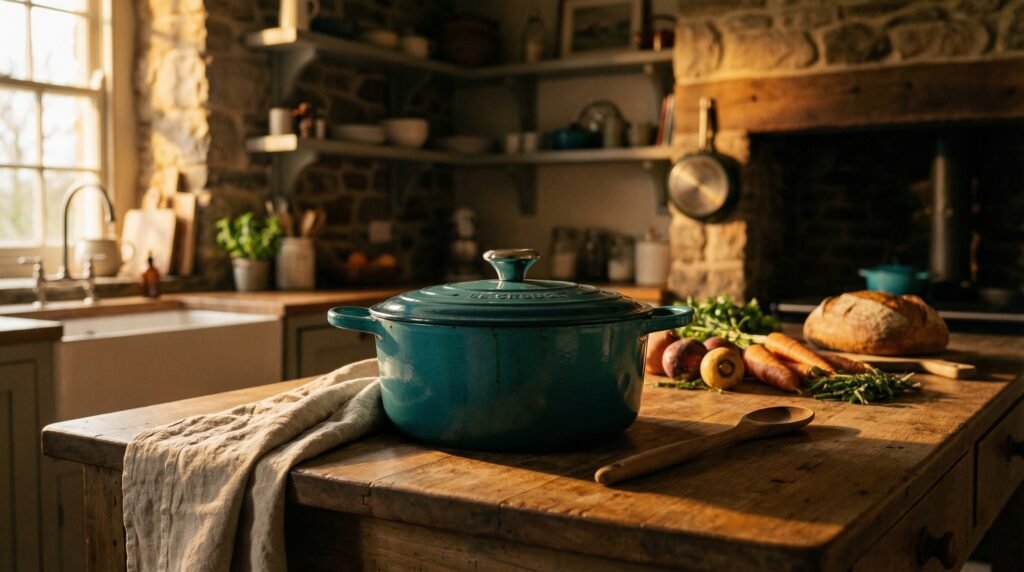
Here’s the honest truth though — any Dutch oven you already own will work perfectly. Cast iron, enameled, whatever you have in your cabinet right now. Use it.
If you’re buying one and want something beautiful, mine is this teal enameled cast iron Dutch oven with a gold knob and embossed cactus design. It’s stunning and it lives on my counter permanently. But it is absolutely a nice-to-have, not a need-to-have.
What it replaces: Baking sheets, steam injection, covered casserole dishes
5. A Banneton Proofing Basket
A banneton — also called a proofing basket or brotform — gives your shaped dough structure during the final proof. It holds the shape, wicks away moisture from the surface, and leaves those beautiful spiral flour rings on the crust.
I use mine every single bake. Once you’ve proofed in a banneton you’ll understand why — the dough holds its shape better going into the Dutch oven and the crust pattern is genuinely beautiful.
Banneton Proofing Basket 9 inch
What it replaces: Bowls lined with floured towels, inconsistent shaping
6. A Bench Scraper
The most underrated tool in bread baking. A bench scraper is a flat metal blade with a handle — you use it to divide dough, shape loaves, clean your work surface, and move dough without it sticking to your hands.
Before I had one I used a spatula. A spatula is not a bench scraper. Get a bench scraper.
What it replaces: Spatulas, dough scrapers, your hands doing work they shouldn’t have to do
7. A Bread Lame
A bread lame is a scoring tool — a razor blade on a handle — used to slash the top of your loaf before it goes in the oven. Scoring controls where the bread expands during baking and prevents it from bursting randomly at the sides.
I score every single loaf. Sometimes a simple slash, sometimes a pattern. The lame makes it clean and precise — a regular knife drags the dough and gives you a ragged score.
What it replaces: Sharp knives, razor blades, uncontrolled oven bursts
8. Parchment Paper or Dutch Oven Liners
You need something between your dough and your Dutch oven. Parchment paper is the standard — cut a square, place your shaped dough on it, use it as a sling to lower the dough into the hot Dutch oven.
Pre-cut Dutch oven liners are even easier — the right size and shape, ready to go. I use both depending on what’s handy.
What it replaces: Flouring the Dutch oven, struggling to lower dough without burning yourself
9. A Sourdough Warming Plate
This one is for cold kitchen bakers — and if you bake in winter you know exactly who you are.
I use the SourKeeper sourdough warming plate to keep my starter jar and my banneton at a consistent temperature. In a cold ranch kitchen in winter this makes a real difference — fermentation slows dramatically when it’s cold and a warming plate takes the guesswork out of it.
Not essential in a warm kitchen. Essential in mine.
What it replaces: Hunting for warm spots, inconsistent fermentation in cold weather
The 3 That Are Just Hype
1. Fancy Bread Proofing Boxes
A proofing box is a temperature-controlled container for your dough. They exist, they work, and they cost $80-150.
You don’t need one. A turned-off oven with the light on, a warm corner of your kitchen, or a warming plate all do the same thing. Save your money.
2. Specialty Sourdough Timers
There are actual timers marketed specifically for sourdough. They’re just timers. Your phone has a timer. Use your phone.
3. Sourdough Cookbooks
I know this is controversial. But here’s the thing — every sourdough recipe you will ever need is available for free on the internet, written by people who bake sourdough every day and share everything they know.
A beautiful cookbook with stunning photography is a lovely thing to own. But it’s not going to teach you to bake better bread than a good blog post will. Start with free resources — including this one — and buy the cookbook later if you still want it.
The Starter Kit: What to Buy First
If you’re just starting out and want to know what to prioritize, here’s the order I’d buy in:
- Kitchen scale — buy this first, today
- Starter jar kit — buy this when you get your starter (or start with a Ball jar)
- Dutch oven — buy this before your first bake (or use one you already own)
- Banneton — buy this once you’re baking regularly
- Bench scraper + bread lame — buy these together, they’re inexpensive
- Dough machine — buy this when you’re ready to make the process easier
- Warming plate — buy this if you bake in a cold kitchen
That’s your complete sourdough tools and equipment starter list. Everything else — wait and see if you actually need it.
Ready to bake your first loaf? Start here: Sourdough for Beginners: The Simple Method That Actually Works →
Don’t have a starter yet? Here’s how to get one: How to Make a Sourdough Starter from Scratch →