My Sourdough Morning Routine on the Ranch (Simple, Real, and Repeatable)
This post contains affiliate links. If you purchase through my links, I may earn a small commission at no extra cost to you. I only recommend products I actually use in my ranch kitchen.
Most sourdough content makes the whole thing look like a performance. The flour is artfully dusted. The kitchen is spotless. The light is perfect. And somewhere in there, the actual routine gets buried under the aesthetic.
Establishing a consistent sourdough morning routine can transform your baking experience.
This is the essence of my sourdough morning routine: a blend of simplicity and effectiveness.
Understanding the sourdough morning routine helps demystify the process.
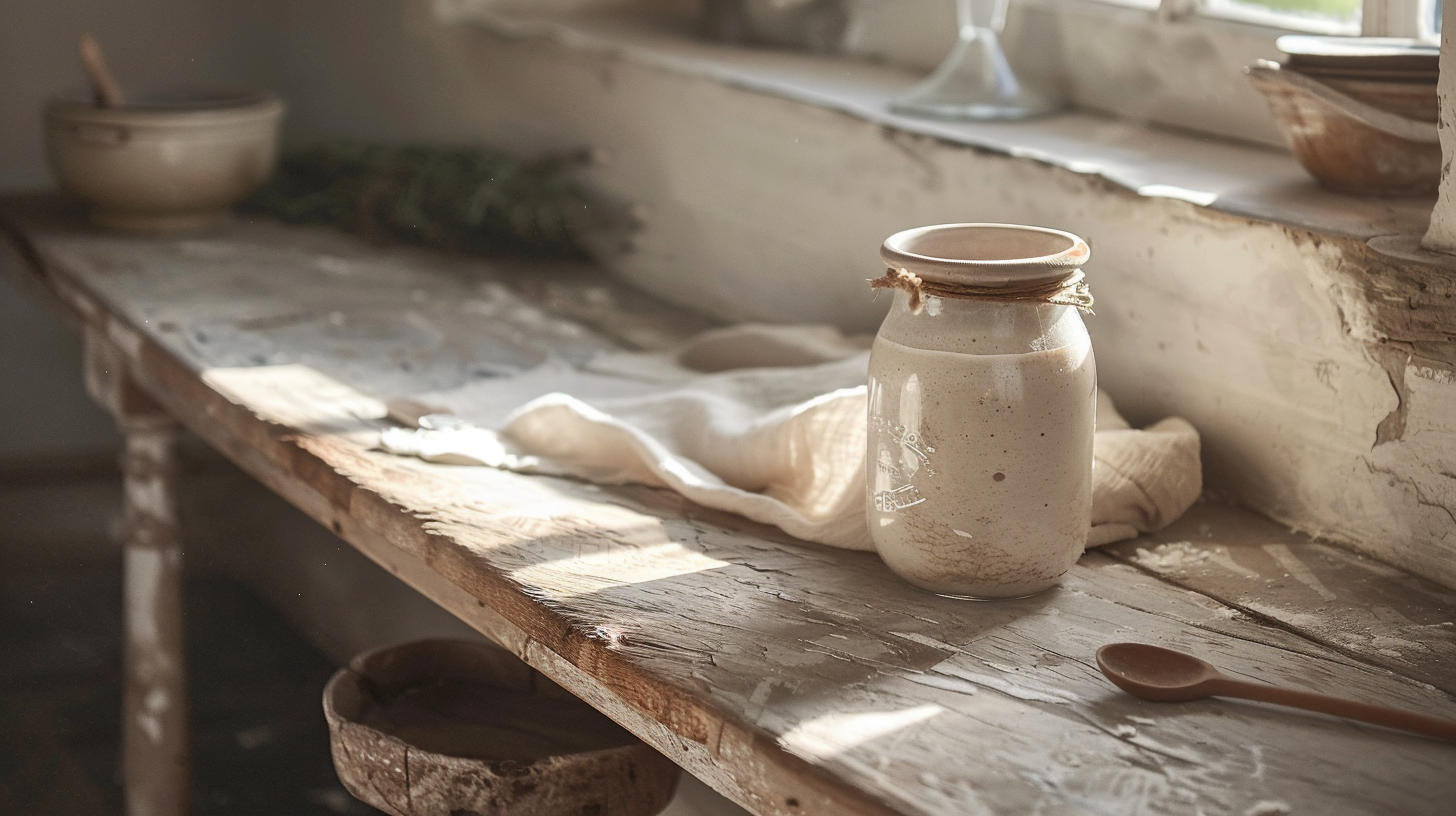
Here’s what my sourdough morning actually looks like: barn boots by the door, coffee going before my eyes are fully open, and a starter that has been sitting in the same mason jar for longer than I care to admit. It works. The bread is good. And the routine took me about two weeks to stop thinking about and just do.
If you’ve been baking sourdough for a while and still feel like the timing is a mystery — or if you’re just getting started and want to know what a real baking day looks like — this is the post. No performance. Just the routine.
A reliable sourdough morning routine is key to achieving great results.
My sourdough morning routine allows for flexibility while ensuring that the bread turns out fantastic.
The joy of a sourdough morning routine is its ability to integrate seamlessly into daily life.
Assessing my sourdough morning routine allows me to streamline my baking process.
Following my sourdough morning routine guarantees that I bake at optimal times.
1. Why a Sourdough Morning Routine Actually Matters
Sourdough doesn’t run on a clock — it runs on conditions. Temperature, hydration, the strength of your starter, the flour you’re using. The routine isn’t about being rigid. It’s about giving your dough consistent conditions so you can predict how it will behave.
When I didn’t have a routine, every loaf was a mystery. I’d forget to feed my starter, bake at random times, and wonder why my results were inconsistent. Once I built a simple morning rhythm around sourdough, everything became more predictable — and predictable is what gets you good bread, week after week.
The other thing a sourdough morning routine does is make baking feel like part of the day instead of an interruption. On the ranch, mornings are already full. Animals, barn chores, coffee, whatever crisis the day decides to open with. Sourdough fits into that because it mostly takes care of itself — it just needs you to check in at the right moments.
“Sourdough doesn’t need you to be perfect. It needs you to be consistent. Those are not the same thing.”
2. My Sourdough Morning Routine: The Full Schedule
I use a same-day method on bake days, which means I mix my dough in the morning and bake in the evening. On non-bake days, my routine is even simpler — just a quick starter check and feed. Here’s what both look like.
Bake Day Morning (Same-Day Method)
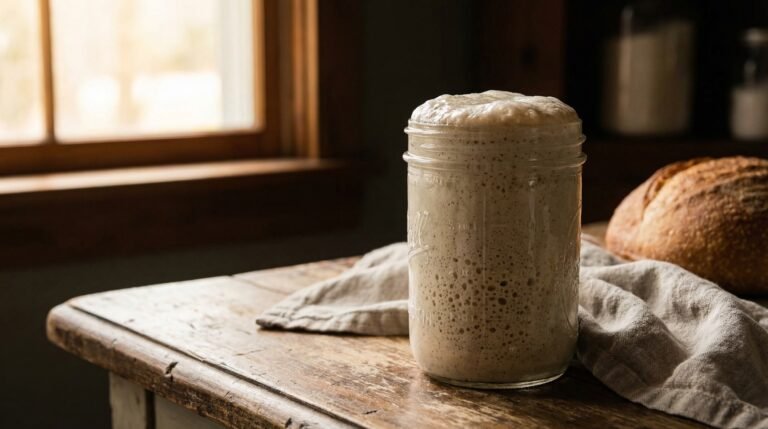
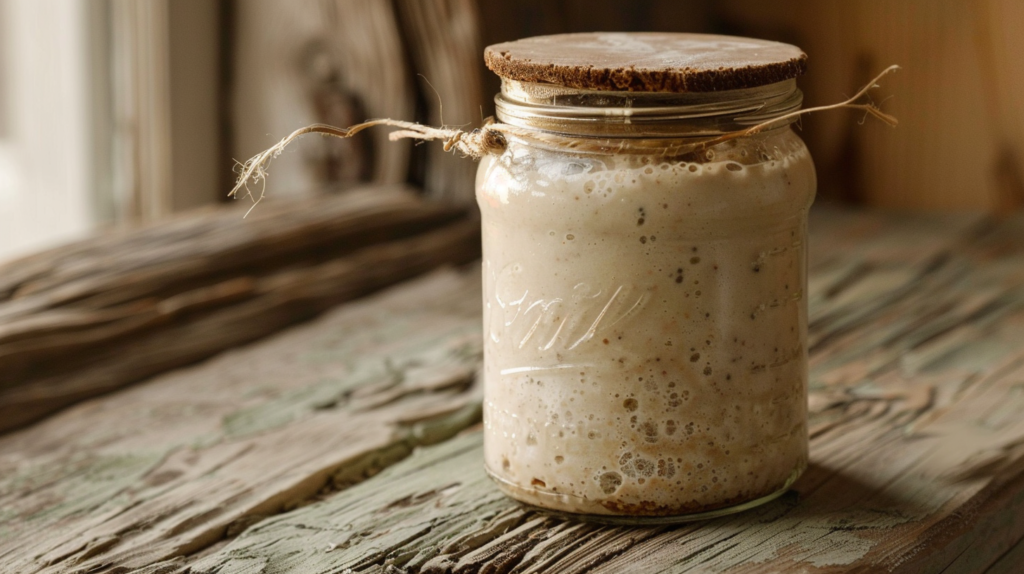
7:00 AM — Check the starter. Before anything else, I look at my starter. Has it doubled? Is it domed on top? Does it smell right — tangy and yeasty, not like nail polish remover? If it’s ready, we’re baking. If it’s not, I give it more time and adjust my timeline.
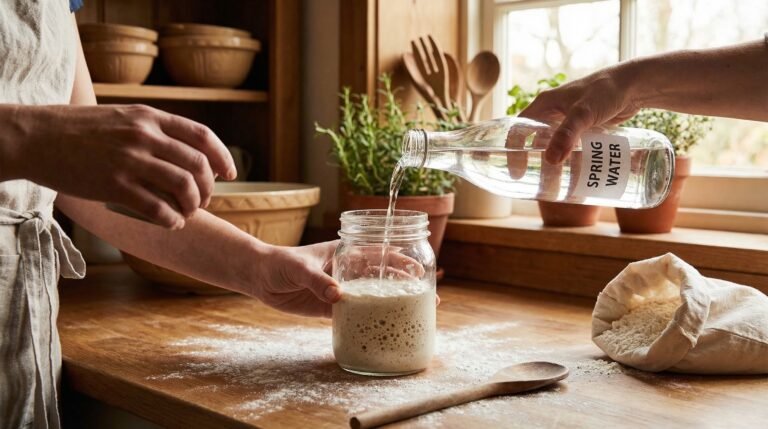
7:30 AM — Mix the dough. I use my dough maker for gluten development — this is the step that changed my bread completely. I mix flour, water, and starter, then let the machine do the work. Bottled water only, unbleached bread flour only. These are non-negotiables in my kitchen.
8:00 AM — Add salt, begin bulk fermentation. Salt goes in after the initial mix. Then the dough goes somewhere warm — I use my Breville proof setting or a warming plate at 80°F. Bulk fermentation is done when the dough has visually doubled. I don’t use the poke test. I watch for the rise.
Late Morning — Shape and cold proof. Once bulk is done, I shape the dough, put it in the banneton, and it goes straight into the fridge. Cold overnight proof is optional here — I often bake same day, but cold proofing gives you more flexibility and a better crust.
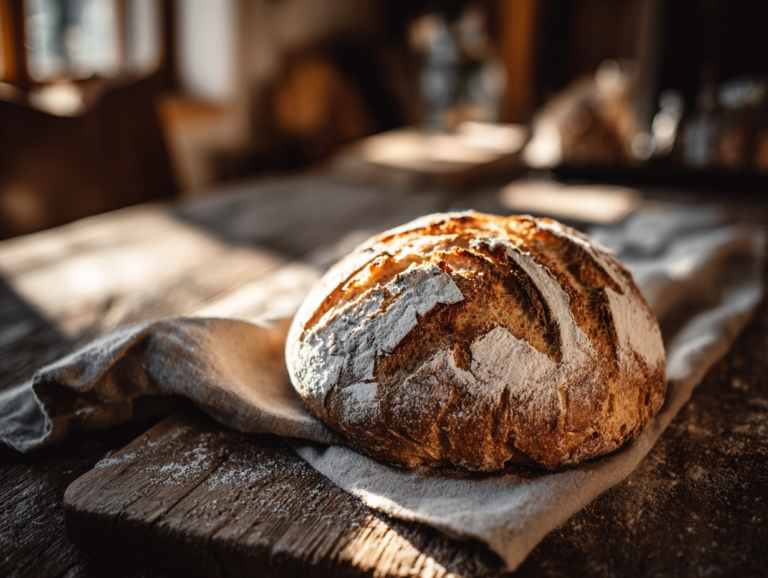
Evening — Bake. Cold Dutch oven into the oven at 475°F. Covered for 21 minutes, then uncovered at 450°F for 7 minutes. That’s it. The bread comes out of the oven and I leave it alone for at least an hour. Cutting into warm sourdough is how you ruin the crumb.
📷 INSERT SECONDARY IMAGE 1 HERE — Sourdough starter in mason jar with rubber band rise marker
Non-Bake Day Morning (Maintenance Only)
On days I’m not baking, the routine is two minutes:
- Check the starter — is it happy? Has it risen and fallen?
- Feed it — I use equal parts starter, flour, and water by weight. Kitchen scale is non-negotiable here. Find mine linked at farmhousebyhand.com/go/kitchen-scale.
- Put it back — room temp if baking tomorrow, fridge if I’m taking a break for a few days.
That’s genuinely it. Sourdough maintenance gets a bad reputation for being demanding. Mine gets two minutes and a glance most mornings.
3. The Tools That Make This Routine Work
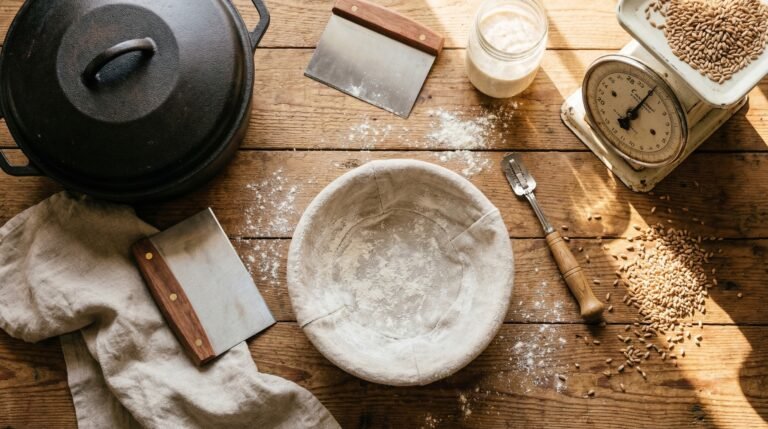
I’m not a gear person. I don’t have a lot of specialty equipment and I don’t think you need it. But there are a few things that make a real difference in a sourdough morning routine.
A kitchen scale. Sourdough is baking by weight, not volume. Measuring flour in cups is how you get inconsistent bread. I use this scale and it lives on my counter permanently.
Mason jars. My starter lives in a mason jar. It’s easy to see the rise, easy to clean, and costs nothing. A 12-pack covers starter storage, discard storage, and about fourteen other homestead uses.
A bench scraper. The single most underrated sourdough tool. Helps with shaping, transfers dough without tearing, and scrapes your counter clean. This one has been in my kitchen for years.
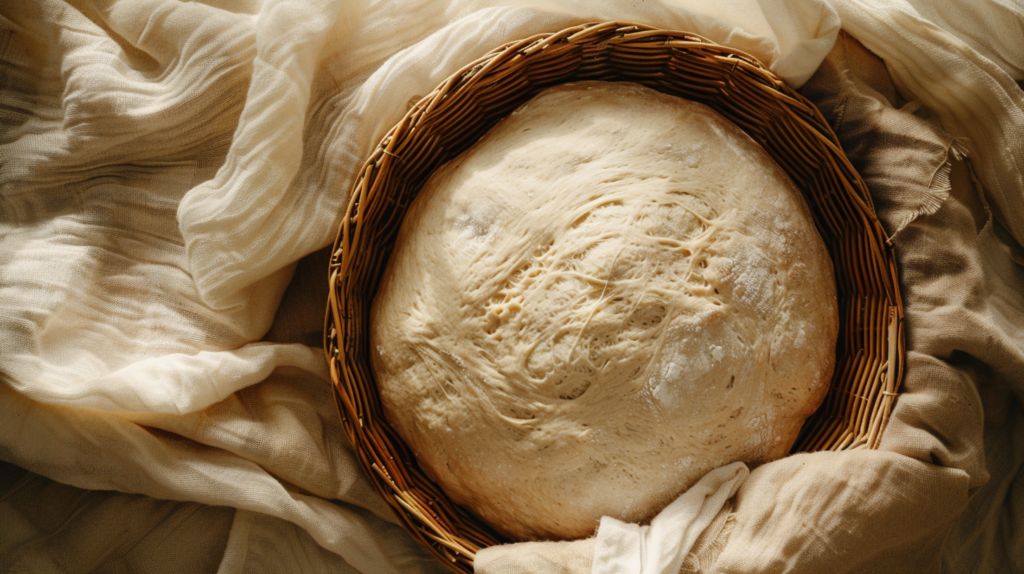
A banneton proofing basket. Not strictly required — you can use a bowl lined with a floured cloth — but a banneton gives you a better shape and that classic spiral pattern that makes your loaves look like you know what you’re doing.
A Dutch oven. The steam trap that makes sourdough crust possible. I use mine cold — straight from fridge to cold oven — and it works perfectly. Le Creuset Signature Bread Oven I recommend for home bakers.
My sourdough morning routine reflects my lifestyle, keeping things easy yet rewarding.
Embracing a sourdough morning routine can change your approach to baking.
Following a proper sourdough morning routine ensures peak performance from your starter.
The timing of your sourdough morning routine is crucial for successful baking.
Mastering the sourdough morning routine will elevate your baking skills.
Each step in my sourdough morning routine enhances the flavor and texture of my bread.
4. How to Fit Sourdough Into a Ranch Morning (Without Losing Your Mind)
The honest answer is that sourdough fits into a ranch morning because it’s mostly passive. You do something, then you walk away. That’s actually ideal when you have animals to feed, barn chores to manage, and a day that doesn’t wait for your bread to be ready.
Understanding your dough’s behavior is part of the sourdough morning routine.
With consistent practice, your sourdough morning routine will become second nature.
Here’s how I think about it: sourdough baking is a series of five-minute tasks spread across a day, not a day-long project. Feed the starter while the coffee brews. Mix the dough before you head outside. Check the rise when you come back in. Shape it after lunch. Bake it while you make dinner.
The ranch doesn’t slow down for sourdough. But sourdough doesn’t ask it to — which is one of the reasons I love it. It runs on the same rhythm as everything else out here: patient, slow, and rewarding if you just show up.
“Feed the starter while the coffee brews. Mix the dough before you head outside. Check the rise when you come back in. It fits because it has to — and it does.”
Ultimately, a well-executed sourdough morning routine leads to exquisite bread.
Your commitment to the sourdough morning routine will yield delightful rewards.
5. Common Sourdough Morning Routine Questions
What time should I feed my sourdough starter?
Feed your starter about 4–8 hours before you plan to mix your dough, so it’s at peak activity when you need it. On the ranch, I feed mine first thing in the morning and mix dough by mid-morning. Adjust based on how warm your kitchen runs — warmer kitchens mean faster rise times.
How do I know when my sourdough starter is ready to use?
The beauty of a sourdough morning routine lies in its simplicity and effectiveness.
Look for visual doubling, a domed top, and a tangy-yeasty smell. If your starter passes the float test — a small spoonful dropped in water floats — it’s ready. I rely mostly on visual doubling and smell. After a while you’ll just know.
Can I bake sourdough if I have a busy morning?
Yes — that’s exactly what the same-day method is designed for. Mix it, set it somewhere warm, and go do your day. Sourdough is flexible within a range. A bulk ferment that takes 4 hours won’t be ruined if it goes 4.5. Learn your dough’s behavior in your kitchen and the routine gets much easier.
How often should I bake sourdough?
Once or twice a week is plenty for most households and keeps your starter active without constant maintenance. I bake twice a week on the ranch — Tuesdays and Fridays roughly, though the ranch has opinions about schedules. On off days, starter goes in the fridge. Simple.
Do I need a dough maker or bread machine?
No — but it changed everything for me. Hand kneading sourdough is doable; a dough maker just does it better and faster and frees up your hands for everything else happening in a ranch morning. If you bake regularly, it’s worth considering.
The Routine That Runs Itself
A good sourdough morning routine isn’t complicated. It’s just consistent. Once you’ve done it twenty times, you stop thinking about it — the starter gets fed, the dough gets mixed, the bread comes out of the oven. It becomes part of the day the same way barn chores do.
If you’re still getting your starter going, my post on how to make a sourdough starter from scratch will get you there. And once you’ve got your flour situation sorted, I cover the best flour for sourdough in a dedicated post — because flour matters more than most people think.
Want my exact same-day sourdough method I use every morning on our ranch?
👉 Grab my Free Cheat Sheet
And if you’re stocking your kitchen to support a real baking habit, the homestead pantry essentials post covers what I always keep on hand so I’m never starting from zero.
“Real bread. Real life. Real ranch. — Ella”